




Process Optimization
AI enabled B2B SaaS Web Software ( 2024 )

Launched
2024
My role
Lead designer
Research/Testing
Product Strategy/Roadmap
Team
Product Manager
Technical Product Manager
Subject Expert Engineer
Researcher
5+ Dev Engineers
Overview
AI-enabled monitoring dashboard to maximize industrial production performance
Before 2023, most industrial tools on the market were specific to a particular functional area or focused on individual assets rather than the entire system. To bridge the gap, Baker Hughes aims to build a comprehensive product suite for global business.
Process Optimization as a key part of the product suite, providing an AI-enabled solution to help users monitor production performance and system status, optimize production volume to boost operating margins.
Problem & challenge
Disconnected workflows and fragmented data cause low product rate
Energy industrial businesses face many operational challenges leading to low production volume. Fragmented data makes it difficult for users to monitor overall system status (e.g., asset downtime) and take quick action to fix issues. How might we connect workflows across 3 role-based personas to detect failures faster without cluttering their individual workspaces?
Outcome & Impact
Bring millions in revenue for clients and the company
1-2% energy production increased for daily production.
566 hrs assets downtime reduced.
Energy savings converted into $1,000,000+ in revenue for the client's business in a year.
20% order increased for Baker Hughes by the end of 2025.
Global clients
Software serving clients like…
Research
Overwhelmed by the Traditional software? Same for 3 role-based personas
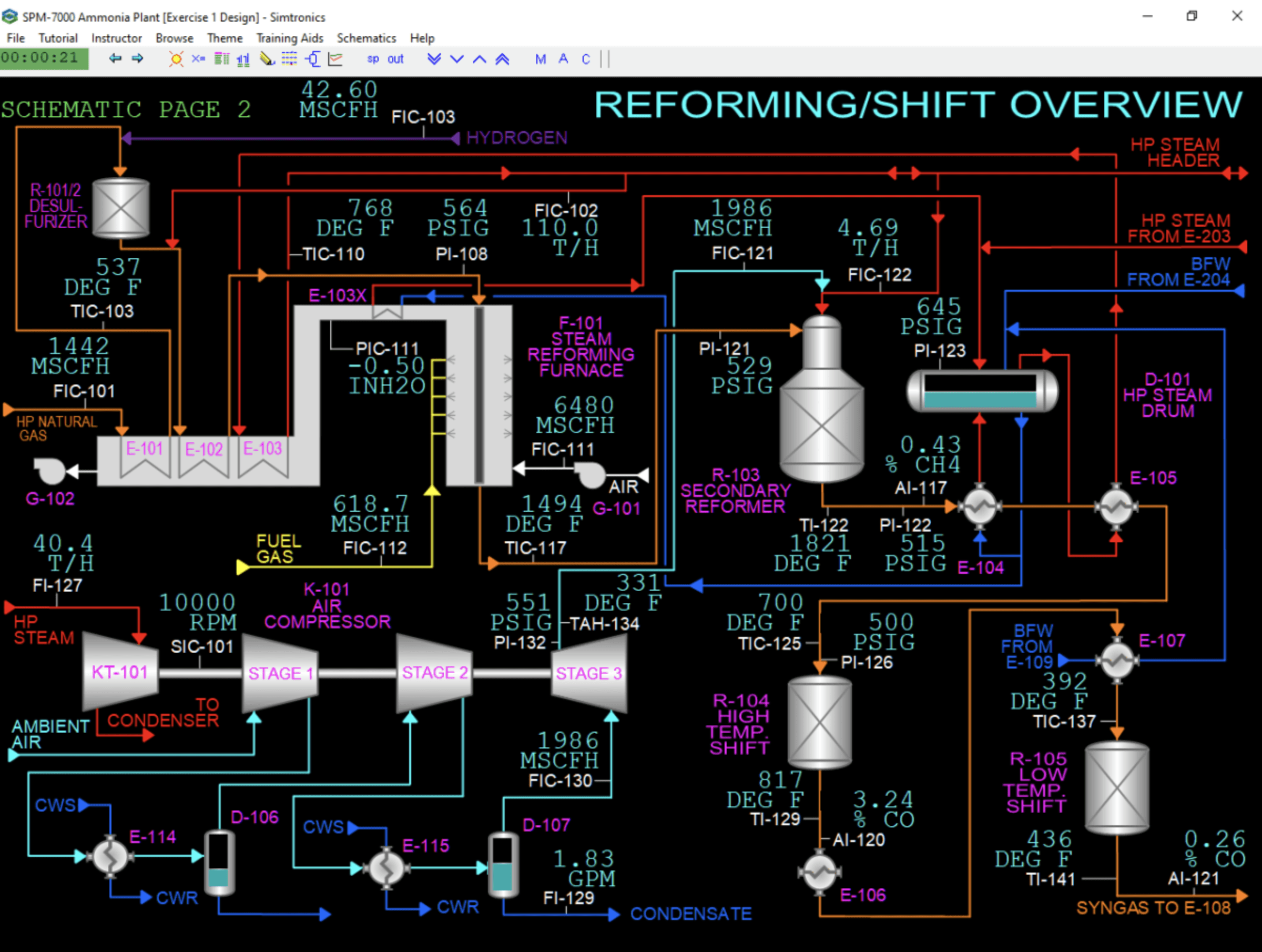
Traditional software screenshot
"I’m trying to optimize the production and fix how it works, but the data points take two hours to come back. By the time I get the data, the process has already changed."
- Interview
Traditionally, monitoring system parameters is time-consuming. By the time they act, the parameter has already changed.
Our clients often have multiple facility sites, but traditional software usually focuses on one site or an asset at a time, which limits users' visibility across the entire facility and complicates workflows for monitoring parameter changes; as a result, they often miss critical information.
Stakeholder Conflicts on Information Architecture
Product ecosystem VS. clients' customization
IA flows
In the early stages of building the Information Architecture for process optimization, the team wanted to merge the client's customized KPI dashboard with specific features directly into the universal KPI dashboard to ship the product faster.
However, if every client asks for customization, it will create more design debt and increase future development effort.
To balance shipping speed with long-term scalability, I initiated a call with stakeholders and used interactive wireframes to explain my concerns about the product ecosystem. I suggested a fixed core workflow, with a separate customization section to design an independent micro app within it, to meet clients' needs and business goals at the same time.
How does it impact our clients?
After the product officially launched in 2024, a new client — a major LNG company adopted the product by integrating their data directly into the backend without requiring any design changes. As the core workflows remained clean, it saved the business significant effort while maintaining the product ecosystem.
solution for persona 1 - panel operator
Real-time dashboard with AI recommendations for monitoring and managing the system.
To help users not overlook any critical data points, I collaborated with the PM and SME to restructure fragmented data points into organized multi-entry points. Designed the card view dashboard with dynamic KPIs prioritized on the top and an AI-enabled recommendation to alert users on critical parameter changes to identify potential failures in advance.
Card view
Deeper action panel for parameter fix in time
While the issues have been detected, users need to respond quickly to fix them. With deeper-level information from specific entry points, they can quickly reset each parameter within 3-5 minutes to optimize production more stably and efficiently.

Design constriant & tradeoff
Is that a perfect solution...? It's too early to say
After testing the screen, I found that when multiple asset alerts appear, operators take longer to complete the task. So, I needed to iterate on the previous solution. However, field constraints in the operator's control room limited my options. All 3 personas sit together and monitor it on a bigger HD screen, which means I need to rethink the physical distances and angles in the control room for each persona.
I tried different design options with the team to meet all personas' needs, as well as the tech feasibility requirements. Finally, we decided to offer a dual-view real-time dashboard (card view + table view) to avoid API delays. Ensured users are responsive to alerts in time.

Image source: Enel’s energy control room
Table view
solution for persona 2 - process optimization engineer
Tracking deployed AI model performance
“I trained and deployed the models to provide a maximized operation range, but I can only rely on the simulated results instead of the real data points for improvement."
- PrO Engineer
Deployed model list screen can help PrO engineer keep tracking and comparing the model's performance in real-time to address unpredictable optimization issues.
Before iteration
New problem coming up
After the product launched, the growing list slows down PrO engineer's work efficiency
When the product launched a month later, clients applied the product with their real data. I noticed an issue during a usability testing session: the growing volume of models in the list increased cognitive load, forcing engineers to spend more time manually searching for models in the side table.
To optimize model discoverability and streamline the selection workflow for engineers. I introduced a "Pattern Selection" feature to stakeholders and checked with developers on the feasibility of data implementation, which allows engineers to filter and identify models by pattern rather than scrolling through extensive lists. This feature significantly reduced search time by 30% and improved overall work efficiency.
After iteration
solution for persona 3 - Unit supervisor
A traceable KPI charts
“My biggest pain point is tracking when and why we're missing optimization potential. My job isn't to look at a single valve, but to ensure the entire plan is actually implemented."
- Unit Supervisor
To help the unit supervisor track the production gap and identify potential opportunities more efficiently from the density data, visualized KPIs in charts can help users quickly understand trends to set the next target.

Product value
We achieved beyond-expectation results
Over the past years, the Cordant™ Process Optimization solution across multiple core business lines, including ammonia production, gas processing, LNG, and offshore FPSO operations, serving several key account clients. We achieved beyond-expectation results in AI-driven advanced process modeling and real-time optimization. Not only did we deliver a 1-2% overall improvement in production and energy reduction, but we also drove significant commercial value in projects — such as boosting LNG production by up to 1.5% and helping a gas processing plant realize an estimated $10 million annual margin increase, fully empowering our clients to achieve their core goals of reducing costs and maximizing profitability.
"This initiative has fundamentally changed how we operate. The First principles and AI-based platforms have empowered our teams to make faster, smarter decisions, and the results speak for themselves. Through QAFCO’s Operational Excellence Program and our collaboration with Baker Hughes, we have elevated reliability across our assets. We’re building a culture of continuous improvement and innovation."
- Abdulla Al Naemi, Head of Reliability Engineering, Qatar Fertilizer Company (QAFCO)